USA-China, the two economic superpowers - Analysis/ What is expected from the 3-day Trump-Xi Jinping summit?

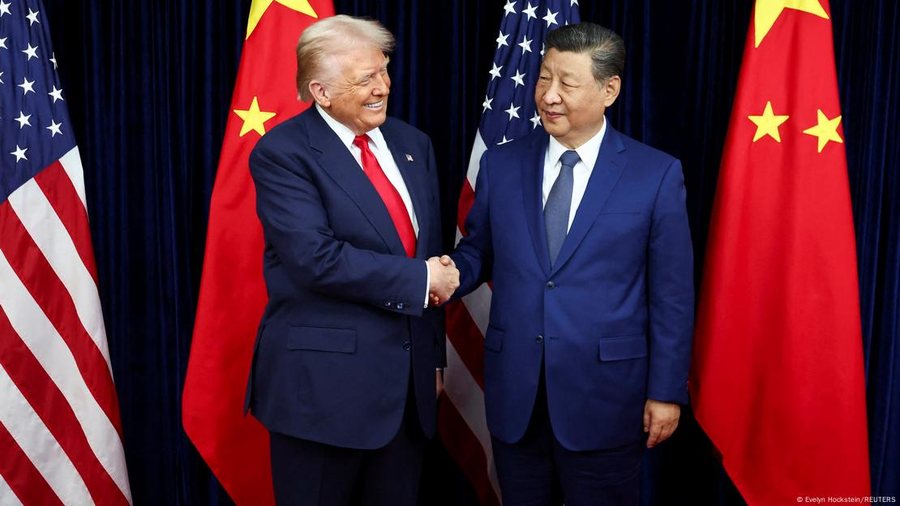
As US President Donald Trump arrives in Beijing for a three-day summit that ends on Friday, the symbolism itself carries considerable significance. This is the first state visit to China by a sitting US president since Trump's previous trip in 2017, nearly nine years ago.
The geopolitical backdrop to this visit is significantly more volatile than it was at the time. The Iran war has roiled global energy markets, disrupted shipping lanes and revived concerns about broader regional escalation.
Meanwhile, China has sought to position itself as a source of economic continuity and diplomatic stability, strengthening trade ties across Southeast Asia, the Gulf, and parts of Africa and Latin America.
American strategy has reestablished military and economic supremacy in the region with the express purpose of mitigating Chinese influence and securing critical supply chains. For example, the US and China are currently in a bitter dispute over port control in the Panama Canal.
Since Trump's visit to China in 2017, the US has continued to lead the global economy. According to the latest IMF forecasts released in April, US nominal GDP is expected to exceed $30 trillion by 2026, compared to around $20 trillion for China, representing about 25% and 17% of the global economy, respectively.
The US and China have held the top two spots in the nominal GDP rankings for more than a decade, but the gap, while large, is gradually narrowing as China grows faster. The Chinese economy is growing at twice the rate of its American rival and significantly above the global rate. However, living standards between the two countries remain profoundly different.
IMF projections put US GDP per capita in 2026 at over $94,000, while China's is close to $15,000 and the world's is almost $16,000.
Trade tensions remain central to U.S.-China relations despite several rounds of negotiations over the past year. Although the two countries eased some tariffs and export restrictions by the end of 2025, disagreements persist over semiconductors, electric vehicles, artificial intelligence and access to critical minerals.
Based on data from the State Administration of Foreign Exchange, China's foreign exchange reserves remain the largest in the world at more than $3.2 trillion. These funds provide policymakers with significant capacity to manage financial instability and support the Chinese yuan, or renminbi.
The US holds relatively smaller reserves but continues to benefit from the global dominance of the dollar, which remains the main currency used in international trade and central bank reserves.
Artificial intelligence and military spending have become central battlegrounds. Economic competition between Washington and Beijing is increasingly inseparable from military and technological rivalry. The world's three largest military spenders remain the US, China and Russia, respectively, and together they account for 51% of the global total.
Technology, specifically AI, has emerged as perhaps the defining arena of competition. The US maintains key strengths in advanced chip design, aerospace, software and research capacity. Meanwhile, China has built dominant positions in electric vehicle batteries, renewable energy infrastructure, telecommunications equipment and industrial manufacturing.
Chinese companies now account for more than 90% of global solar photovoltaic power generation capacity and over 70% of the global market for batteries for electric vehicles. These sectors are seen by Beijing as strategically important for future economic influence.
Trump's visit is therefore likely to be judged less by immediate deals than by whether it helps prevent further deterioration in relations between the two powers, whose rivalry increasingly shapes global trade, investment and security.
For Beijing, the summit offers an opportunity to project confidence and stability amid broader international uncertainty. For Washington, it is a test of whether the US can continue to shape the economic and strategic rules of an increasingly multipolar world.

General growth in the foreign exchange market – Major foreign currencies strengthen
The US dollar has registered an increase in value this Wednesday, just like the day before, being bought this morning for 80.9 lek and being sold for 82 lek......
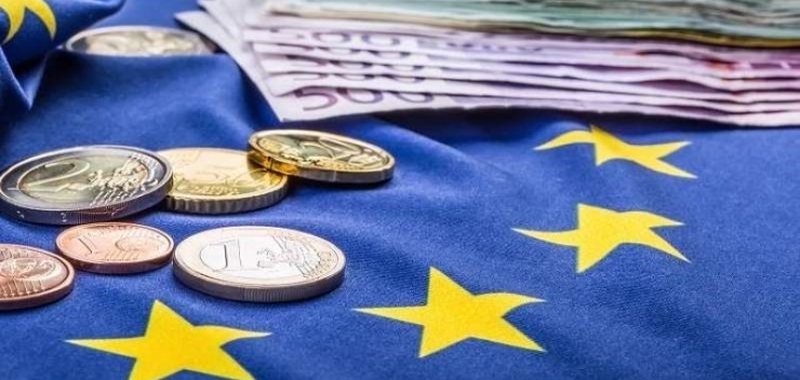
EU's record 2 trillion euro budget - Which sectors win and which lose?
The EU is negotiating its next long-term budget, the Multiannual Financial Framework for the years 2028-2034. The European Commission proposed €1.8 trillion,......
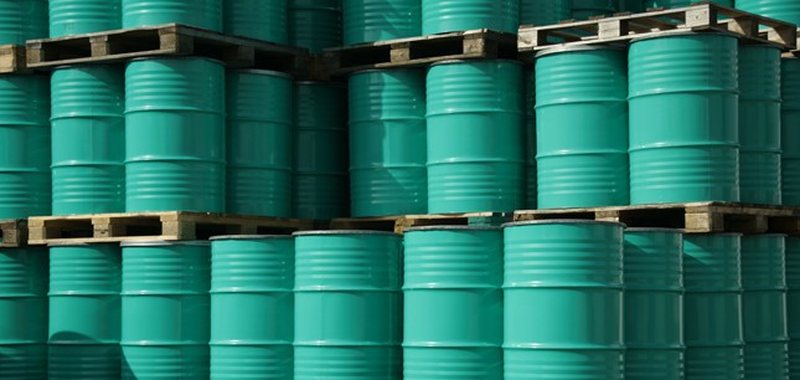
19.8 million barrels of oil stuck in the Middle East - US administration updates data. Expects demand to fall, prices to rise
The US Energy Information Administration revised its previous forecasts to reflect a much larger and longer-lasting hit to global oil supplies from the war......
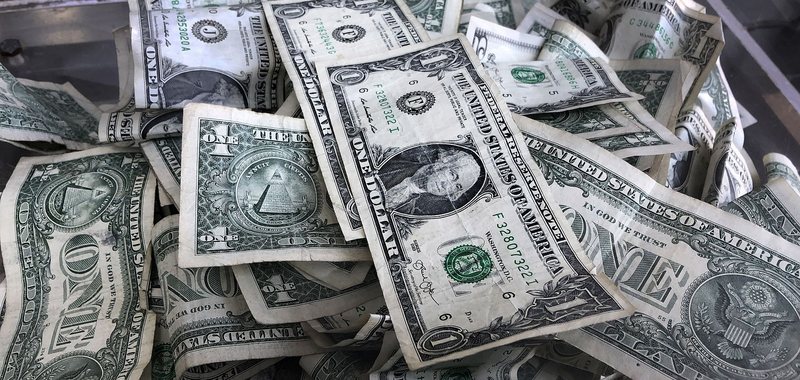
Tough poker in the US with the dollar - Washington moves towards currency swap agreements
The US is seeking to further strengthen the dollar's position as the global reserve currency, amid China's efforts to further strengthen the influence of the......

TikTok significantly expands its influence in Albania/Ad reach expands by 9.3% of the audience in a short time
Data from DataReportal, based on TikTok's advertising sources, shows that TikTok has become one of the most powerful digital platforms in Albania,......

EU to ban Brazilian meat imports - From September 3. Reason, the use of antimicrobials for animal husbandry
An EU committee made up of experts from member states voted to ban imports of Brazilian meat starting September 3 due to the use of antimicrobials to......

Rama in Cërrik: Developing vocational education and agriculture through modern technology
A new model of modern agricultural development combined with vocational education is taking shape in Cërrik, through the experimental farm of the “Mihal......

Living in state buildings, Deputy Prime Minister Koçiu: 2000 families will receive ownership documents
Deputy Prime Minister Albana Koçiu held a meeting with residents of Administrative Unit No. 6 in Tirana, where she informed citizens about the latest......