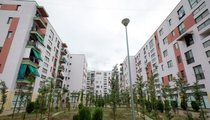
Municipalities triple tax revenues - Collect 238 million euros in 5 months, exceeding the plan by over 100%


The 61 municipalities in Albania have significantly increased their revenue collection performance this year. According to official data from the Ministry of Finance, local governments have collected nearly 28.5 billion lek, or about 290 million euros, in the first 5 months of the year alone.
Compared to the same period a year earlier, local government revenues for the period January-May 2026 recorded an increase of around 165 million euros or 136.7%.
Categorized by items, about 23.8 billion lek or about 238 million euros have been collected from local taxes, from 87 million euros collected in January-May 2025, almost tripling compared to this period. Meanwhile, compared to the plan, a doubling of revenues is noted.
Revenues from property taxes in the first 5 months amounted to 46 million euros, an increase of 14 million euros compared to the previous year.
In the structure of local tax revenues, the contribution of revenues from two main taxes prevails, revenues from the infrastructure impact tax for new construction and revenues from taxes on real estate (buildings, agricultural land and plots of land). Together, these two types of taxes represent about 88% of total local tax revenues.
The largest increase in local government's own revenue sources is the "infrastructure impact tax." The municipalities with the largest increase in revenue from this tax are Tirana, Vlora, Himara and Saranda, which also have the highest demand for construction.
The strong growth in revenues from this tax reflects the high dynamics of investments in construction, especially in tourist and urban areas. These revenues create additional opportunities for municipalities to improve services and increase investments in local infrastructure.
Local government revenues remain largely dependent on state budget transfers. This dependence is an unfavorable indicator for the local budget, as local authorities often do not have the opportunity to generate sufficient resources to cover necessary local expenditures. Also, fiscal decentralization as the ratio of revenue distribution between the two levels of government continues to remain very low.
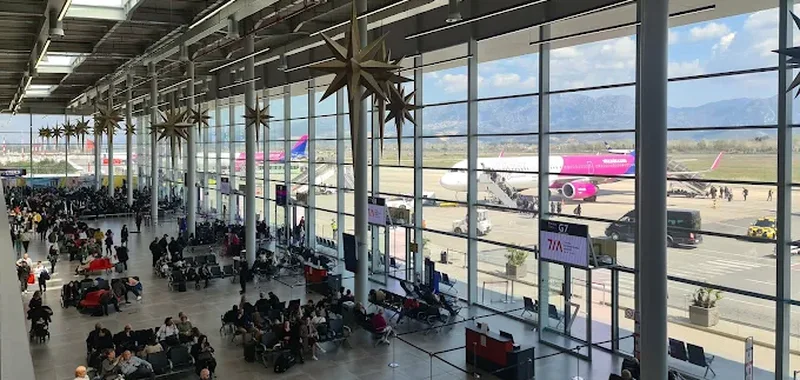
Over 1.25 million passengers flew from TIA in May/ Wizz Air and Ryanair dominated the Albanian air market
Mother Teresa International Airport has recently released its air traffic statistics for the month of May, showing an increase in air travel activity.......
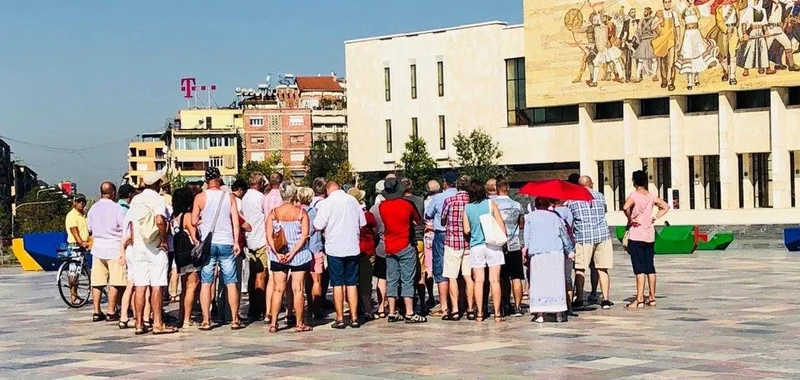
Over 1 million foreigners in Albania during May/ Foreign visitors increased by 15.9%, led by those from Southern Europe
According to data published by the Institute of Statistics, during the month of May, over 1.88 million entries of Albanian and foreign citizens were......

Austria leads foreign investments in Albania - With 60 million euros in early 2026. Leaving behind Italy, the Netherlands and Turkey
Austria, Italy, the Netherlands and Turkey are the countries that brought the most investments to Albania during the first quarter of 2026. The latest data......

Constructions in protected water areas, 300 thousand euro fine - Instruction/ Violations in the fishing sector, measures in relation to the damage
Fines in the fishing sector will be imposed in relation to the penalty incurred. According to the latest instruction of the Ministry of Agriculture,......

How much are the major currencies today? – The US Dollar weakens. The British Pound gains points
The US dollar, after the continuous increase it recorded throughout this week, has suffered a slight decrease in its value this morning, being bought today......

Fitness market heading towards oversaturation - Tërpo: Competition is very high
In every area of the capital, gyms have become a common part of the urban landscape. From large fitness centers to small neighborhood studios, physical......
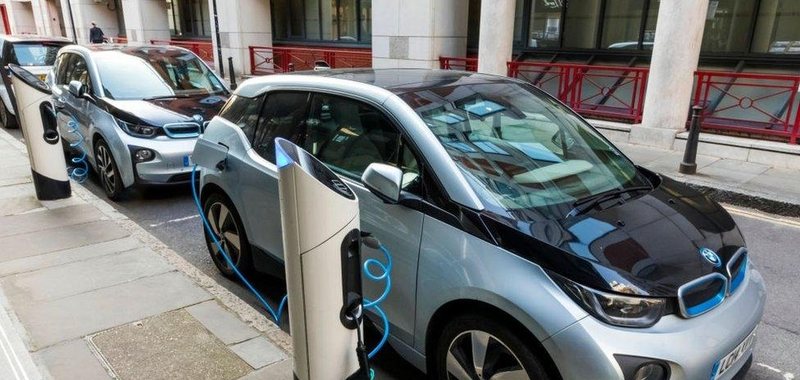
More electric vehicles, less pollution - DPSHTRR: January-May, almost 5 thousand units were registered
The General Directorate of Road Transport Services announces that during the first five months of the year, 4,939 fully electric vehicles (All-Electric) were......

Foreign investors focus on the property market - Real estate, finance and energy top the list of most funded sectors
Compared to the first quarter of 2025, Albania has managed to attract more foreign investment even in early 2026. The latest data from the Bank of Albania......