A World at War - Conflicts that "Shocked" the Globe in 2025

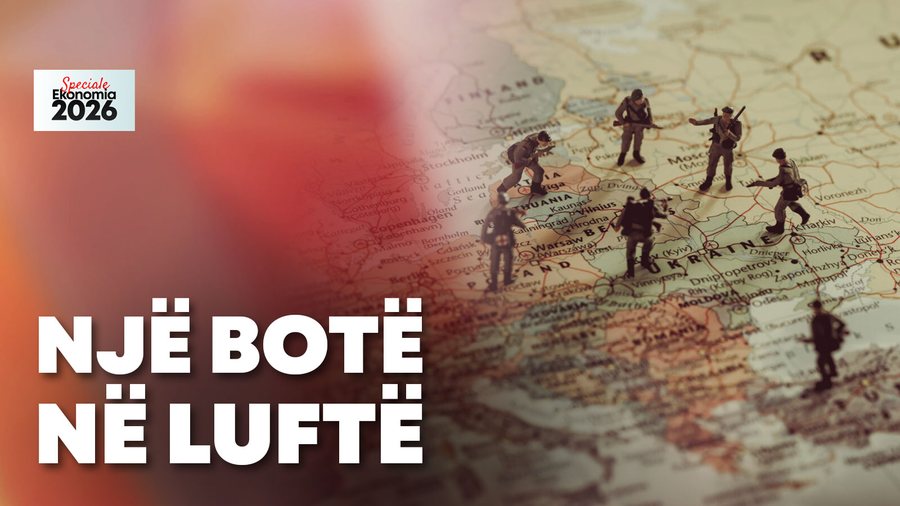
Recent years have seen a series of high-intensity conflicts with far-reaching global impact. In 2025, the wars in Ukraine, Gaza, and Sudan are each in their third or fourth year, with peace talks so far failing. This year has also seen an escalation of fighting in the Democratic Republic of Congo, a brief conflict between India and Pakistan, and an expansion of the broader crisis in the Middle East.
Hundreds of thousands of people have been killed in the conflicts of the 2020s; millions more have been injured, displaced and mistreated, while some regions may never fully recover.
Many countries are increasing their military investments and capabilities, while the effects of these wars could have a social and economic impact throughout the world.
Russia-Ukraine war
The Russia-Ukraine war, especially since the Russian invasion in February 2022, has become the largest conflict in Europe since World War II. The number of casualties on both sides remains uncertain, but Western sources believe that around 350,000 people have been killed since 2022. Of these, around 250,000 are Russian soldiers, with several hundred civilians killed. Ukrainian casualties are estimated at around 100,000 soldiers and up to 15,000 civilians.
The total number of casualties, including deaths, injuries, missing or captured, is around one million for Russia and almost 500,000 for Ukraine. In addition, over five million Ukrainians live as refugees in other countries, while nearly four million are internally displaced. By the end of 2025, Russia controls around 20% of the territories internationally recognized as Ukrainian. Estimates of economic damage to Ukraine amount to around $590 billion, which is three times its pre-war GDP.
The year 2025 began with much uncertainty for Ukraine, due to the re-election of Donald Trump as president of the United States. Since taking office in January, Trump's public support for Kiev and his relationship with President Volodymyr Zelenskyy have fluctuated, especially after their meeting in the Oval Office in February. Meanwhile, military aid deliveries have also faced delays.
However, the United States remains Ukraine's biggest international backer and is expected to benefit from a long-term agreement on minerals and natural resources, which was signed in April. During this period, other Western allies have increased military support for Kiev; some of them have lifted restrictions on the weapons the country can use to strike Russia.
Peace negotiations have resumed with the mediation of the United States, Turkey, and the European Union, focusing discussions on achieving a sustainable ceasefire and protecting critical infrastructure.
Some compromise proposals include territory swaps and sanctions relief, raising the possibility of a partial agreement that could serve as a basis for deeper talks during 2026. However, there is a risk that clashes will resume if the parties do not respect the terms of the ceasefire.
The Israel-Palestine conflict
Since the start of the conflict, more than 70,000 Palestinians and 1,700 Israelis have been killed during Israel's 20-month occupation of the Gaza Strip, according to official Israeli and Palestinian sources. However, other sources give different figures and the UN believes the death toll in Gaza is much higher. Thousands are still missing and the statistics do not include deaths from preventable causes such as disease, malnutrition or the disruption of health services.
The destruction and lack of aid have fueled one of the world’s largest man-made humanitarian crises in one of the world’s most populous areas. The Israeli blockade has severely restricted the entry of people and aid. Over 90% of the population has been displaced (many of them multiple times), while all of Gaza faces high levels of food insecurity; nearly a quarter of the population is at risk of starvation. More than 70% of buildings, including 92% of homes, have been destroyed or damaged, and over half of hospitals are out of service.
The Israeli military (IDF) has lost about 425 soldiers since October 2023, while claiming to have killed over 20,000 Hamas fighters. 2025 began with a two-month ceasefire, in an agreement that provided for the release of Israeli hostages in stages, in exchange for the release of thousands of Palestinian prisoners and the start of talks on a permanent ceasefire. The agreement failed to pass the first stage, and Israel resumed the offensive on March 18.
The conflict has not been limited to Gaza: in the West Bank, violence has increased significantly since October 2023, causing over 1,000 Palestinian casualties.
On October 10, 2025, a ceasefire was signed that was supposed to end the conflict. But two months later, Israel has violated the agreement over 500 times, killing at least 356 Palestinians and bringing the total death toll in Gaza to over 70,000.
Middle East
Across the Middle East, thousands of people have been killed and tens of thousands injured in Israel's clashes with Iran, Lebanon, Syria and Yemen. The highest death toll has been in Lebanon, during Israel's war with the Hezbollah group, where cross-border attacks have killed hundreds and forced the evacuation of hundreds of thousands of people on both sides.
However, the most significant development of 2025 in the region was Israel's 12-day war with Iran. On June 13, Israel launched a surprise wave of airstrikes, which further damaged Iranian air defenses and killed several key military and political figures. According to Tel Aviv, the aim was to prevent Tehran from developing nuclear weapons, although Iran-US talks on the Iranian nuclear program were scheduled for June 15 and were subsequently canceled.
In the days that followed, Israel and Iran exchanged airstrikes; casualty figures remain unclear, but Iranian sources reported between 600 and 1,000 killed, while about 30 Israelis were killed and thousands more were injured on both sides. The United States joined Israel's attacks on June 22, striking three key Iranian nuclear facilities.
The attack on the main uranium enrichment center at Fordow was particularly significant, as the facility was located deep underground, and it is believed that only the US has the weapons with the capabilities to strike it. However, it is still unclear how effective these strikes were against Iran's nuclear program.
Tehran retaliated by attacking a US base in Qatar, raising concerns of an escalation of the conflict. But a ceasefire between Iran and Israel took effect on June 24 and tensions have since eased.
Civil war in Sudan
The Sudanese Civil War entered its third year in April 2025, and in absolute terms, it is the world’s largest humanitarian crisis. There is no official death toll, but estimates last year put the number of civilians killed at 150,000, and the total toll in 2025 is likely to be much higher. More than nine million people have been displaced internally since the fighting began, while another three million have fled to neighboring countries. Sudan has a population of about 50 million, and about two-thirds of them are in need of assistance. The Doctors’ Union reported that 522,000 infants died from malnutrition in the first 18 months of the war alone.
The war began in April 2023, when the Rapid Support Forces (RSF) broke away from the Sudanese Armed Forces (SAF), which had led the government after the 2021 military coup. This is the third civil war in Sudan since it achieved independence from Britain in 1956.
Although it is a civil war, there are significant international elements involved, with Libya, Kenya and the United Arab Emirates supporting the Rapid Support Forces. While Egypt, Turkey and Saudi Arabia support the opponents.
Democratic Republic of the Congo
The year 2025 marked an escalation of conflict in the eastern Democratic Republic of the Congo, an area plagued by decades of insurgency, war and instability. Over 7,000 people lost their lives as a direct result of the conflict in January and February 2025 alone, but the spread of the war and the disruption of humanitarian aid, food supplies and health services have multiplied the toll.
The latest phase of the conflict in eastern Congo escalated after the M23 (March 23 Movement) uprising in 2022. The group took the key cities of Goma in January 2025 and Bukavu shortly thereafter. Rwanda is reported to have supported the M23 with up to 12,000 troops, despite denials. The Congolese government’s efforts to counter have been hampered by terrain and the withdrawal of regional peacekeeping forces. The peace and trade agreements between Congo and Rwanda, brokered by the US in June, did not include the M23 and the Congo River Alliance and did not provide stability in the region. A broader framework agreement was signed in November. Also in early December, the countries’ leaders met with President Trump in Washington, where they pledged to commit to implementing the pact.
India-Pakistan conflict
One of the most disturbing developments of the year was the four-day conflict between India and Pakistan in May. Since partition in 1947, relations between the neighbors have been largely hostile, with a few brief conflicts, mainly over the disputed region of Kashmir in the north. Both countries are nuclear powers; India is the world's most populous country, while Pakistan ranks fifth. New Delhi has the world's second-largest active military, while its neighbor ranks seventh. A full-scale war between them would undoubtedly have devastating consequences with global repercussions.
On 22 April 2025, separatists in Indian-administered Kashmir carried out a terrorist attack, killing 26 civilians. In response, on 7 May, India launched a wave of attacks on military and paramilitary targets in Pakistan, which it accused of supporting the terrorist attack. Pakistan denied this and prepared counter-attacks. Over the next four days, the two sides exchanged a series of missile, drone and ground attacks, causing almost 30 casualties in India (excluding the 22 April attack) and over 50 in Pakistan, with about 75 percent of the casualties being civilian.
A ceasefire was agreed on May 10 and, despite some violations the following day, cross-border relations have returned to pre-conflict norms.
The war in Myanmar
As of 2021, the civil war in Myanmar has left more than 80,000 dead, over three million internally displaced and another million fleeing abroad. Myanmar has a population of around 55 million and is one of the poorest countries in Asia. The war involves more than 1,600 ethnic and political groups with different agendas, making it one of the world's most fragmented conflicts. The Tatmadaw military seized power in a coup in 2021, sparking mass protests and an escalation of the fighting. The government-in-exile largely supports the rebels, while the military has been accused of war crimes and crimes against humanity, including the use of chemical weapons and sexual violence.
By 2023 and 2024, the military's control over Myanmar's territory had been significantly reduced to just a fifth of the country, but it remained the largest force and controlled major cities and ports. China's influence in the conflict has gradually increased, especially near the border. Beijing is believed to be supporting Tatmadaw forces to prevent further destabilization of the country.
Uprisings in Sub-Saharan Africa
In West Africa, several Islamist groups are active in Niger, Mali and Burkina Faso, including Nusrat al-Islam and the Islamic State, with 14% of Mali's population affected by the conflict. All of these countries have experienced coups in the past five years, and the new governments are working with the Russian mercenary group Wagner to fight the rebels, but have yet to achieve stability.
There are fears that terrorist activity could spread to other countries such as Ghana, Ivory Coast and Benin. New leaders in these countries have withdrawn French and American troops, indicating a major shift in their policy towards the West.
In northern Nigeria, Islamist groups such as Boko Haram and the Islamic State continue to wreak havoc, while the Nigerian military has failed to restore order. Similarly, Cameroon's military is battling Anglophone separatists in the country's northeast, displacing more than 700,000 people.
In Mozambique, the Islamic State has been active in the northeast since 2017 and the situation worsened after disputed elections in October 2024, where protests were violently suppressed, causing at least 250 casualties.
Which “hotbeds” are at risk of erupting in 2026?
In addition to the continuation of this year’s wars, there is a high risk that several regions will be involved in new conflicts during 2026. A combination of unresolved historical tensions, rivalries and territorial ambition has left the world in an unstable state, where any local clash could have global consequences.
China vs. Taiwan
China spends about 12% of global military spending, while Taiwan spends just 0.8%. Among the countries that side with Taiwan, the United States spends 22.3%, Japan 2.1% and South Korea 2.2%. Chinese leaders are watching Russia’s war in Ukraine to learn lessons about the difficulties of invasion. But the stark difference in military capacity between Beijing and Taiwan could push the Asian superpower to act if American support for the island weakens. So far, a blockade seems more likely than an invasion, although that too carries significant risks, including military intervention and economic retaliation from the United States and its allies.
India vs Pakistan
India has about 180 nuclear missiles, while Pakistan has 170. India accounts for 18% of the world's population, while its neighbor has only 3%. The two old nuclear enemies have reduced tensions after a deadly clash, but their underlying conflict remains unresolved. In April 2025, an attack in India that killed 26 tourists triggered the biggest crisis in recent years, before a ceasefire was declared. With a fifth of the world's population between them, maintaining peace in 2026 is no easy task. An external factor makes the situation even more difficult: America, which often mediates between them, has cooled relations with India, starting a tariff war.
Russia vs. Ukraine
Russia’s losses are estimated to be greater than those of the United States during World War II. Its forces have occupied only 1.3% of additional Ukrainian territory as of December 2022. This slow pace suggests that 2026 could bring either very slow progress or some kind of agreement. But two other scenarios are also possible: the collapse of the Ukrainian front, aided by Kremlin intervention; or the bankruptcy of the Russian economy, as a result of airstrikes that cripple its oil industry. Either scenario would have major consequences for Europe and the world.
Israel vs. Hamas
Some 78% of buildings in Gaza have been damaged or destroyed, and the rubble piles up to 61.5 million tons. Will the fragile ceasefire last? Gaza has been devastated, with tens of thousands killed. Israeli forces control half the territory, while Hamas has not yet disarmed. A resumption of the war is not out of the question. Both sides have accused each other of violating the last ceasefire, negotiated in October. If an international peacekeeping force is formed, reconstruction could begin on a large scale and displaced residents could return to their remaining homes. The most likely outcome remains familiar: a divided territory, Palestinians suffering the consequences, and a prolonged pause in peace…for now.
Congo vs. Rwanda
An estimated 9.8 million people have been displaced by the conflict. Congo produces 76% of the world's cobalt. Decades of tensions over ethnic grievances and Congo's mineral wealth threaten to erupt into full-scale war. In 2025, Rwanda armed, supplied, and directed rebels as they took the city of Goma in Congo. The reasons for the conflict include gold, oil, gas, and other minerals such as cobalt, essential for battery production.
SUDAN
In Sudan, 11.6 million people are internally displaced and 2 million are at risk of famine. The Sudanese Armed Forces (SAF) and the Rapid Support Forces (RSF) remain engaged in fierce fighting. The largest humanitarian crisis in Africa is likely to continue, fueled by Egypt’s support for the Sudanese army and the United Arab Emirates’ support for the opposition. For an ambitious mediator like Donald Trump, Sudan offers gold, oil, and a strategic coastline, as well as the opportunity to end one of the world’s deadliest active conflicts.
Venezuela
Venezuela claims 74% of Guyana’s territory, and its annual oil production is 903 million barrels, compared to its neighbor’s 617 million barrels. With a renewed focus on security in the region, the Trump administration has been massing forces near Venezuela, expanding military exercises and targeting small boats that the Americans say are smuggling drugs. The ultimate goal could be to topple Venezuelan President Nicolás Maduro’s regime. U.S. airstrikes are more likely than a ground invasion. Recently, Venezuela’s president has reasserted a centuries-old claim to two-thirds of the oil-rich territory of neighboring Guyana.
Global stability will remain volatile in 2026, reinforcing the need for international mediation and cooperation. But peace and stability depend largely on the interests of great powers, which often fan the flames of conflict.

From price cuts to drought - What marked the energy sector in 2025
The year 2025 was full of developments for the energy sector. The price of energy for a good part of families decreased, investments in solar energy......

The World in 2026 – EU-Britain draw closer, Trump and Xi strengthen positions
This is Donald Trump’s world, and we’re all just living in it. The master disruptor was the biggest factor shaping global affairs in 2025, and will be for as......

"Defense 2025", among challenges and objectives - Investments in human resources, armaments and logistics
“2025 was a busy year for defense: a higher budget than the previous year, new projects, a resurgence of the military industry and initiatives for drones,......

A year of sports - Albania secures the "play-off" for the World Cup
With a minimal 0-1 victory over Andorra, Albania secured the "play off" phase of the 2026 World Cup, which will take place in the USA, Canada and Mexico, for......

Can Albanian businesses compete in the European market? - From legislation to technology, the path that awaits businesses towards the EU
"As Albania moves ever closer to the European Union, the question arises: are Albanian businesses ready for this challenging market?" Alban Zusi Chairman of......
Is Albania "disappearing" the paper lek? - What is the government's plan to reduce cash payments?
"By the end of this decade, Albania should be "cashless", meaning that all interaction and all financial transactions should be digital. This is completely......

Albania, for every taste and budget - From the hidden "pearl", to the destination for everyone
Tourism has become one of the most important sectors for the economy and development of the country, becoming one of the main engines of economic growth.......
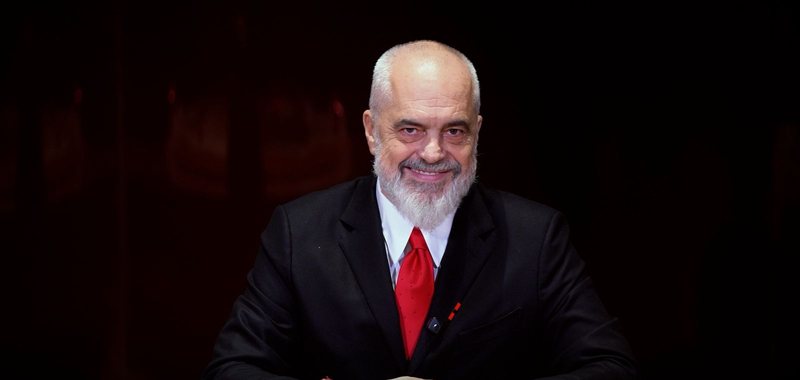
Rama uron shqiptarët në prag të Vitit të Ri: Kemi bërë realitet një Shqipëri tjetër
Në vigjilje të ndërrimit të viteve, Kryeministri Edi Rama iu drejtua qytetarëve shqiptarë, brenda dhe jashtë vendit, me një mesazh reflektues dhe urimi, ku......