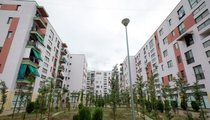
The capital is “born”, the suburbs are “withering”/ The contrast of Albanian demography. Most regions are experiencing natural decline


In the third quarter of 2025, the natural increase of the population in Albania has increased, reaching 1,347 more births than deaths, according to official data published by INSTAT. However, this figure, although positive at first glance, hides deep contrasts between the regions of the country and confirms the continuation of a long trend of decreasing natural increase. For the period January-September 2025, the total natural increase is only 512, which shows that the first two quarters have been with a negative balance, once again raising the alarm about population contraction.
Tirana continues to be the only region with a stable and significantly positive natural increase. During the third quarter, the capital recorded 1,238 more births than deaths, while the total for the nine-month period reached 2,256. This reinforces the fact that internal migration and population concentration in Tirana continue to increase the demographic inequality between the center and the periphery of the country.
On the other side of the table, Korça ranks as the region with the lowest natural increase, recording 216 more deaths than births in the third quarter alone, and a negative balance of 719 for the 9-month period. The decline is deep and consistent, placing Korça among the areas most affected by the aging population and the emigration of young people. Likewise, regions such as Fier, Vlorë, Gjirokastër, Shkodër and Elbasan also report negative natural increase, a clear indicator of the weakening of the demographic structure.
On the other hand, some small mountainous regions, such as Kukës and Dibra, have managed to maintain a positive balance, with 104 and 44 more births than deaths respectively in the third quarter. Although the figures are modest, they show relative stability compared to the rest of the country, although these areas face continuous emigration and a lack of investment.
Overall, the figures for the first nine months of 2025 show that Albania continues to oscillate on the threshold between minimal growth and demographic contraction. This development raises serious questions for public policies in the areas of family, employment and social support.

Digital Albania, closer to Europe - Vienna Institute: Leader in the region for electronic public services
An assessment comes from the Vienna Institute for International Economic Studies Austria and Think Europe Slovenia, within the framework of the "Converge2EU"......

EU plans to create an intelligence unit - The initiative aims to strengthen European security, but there is no shortage of criticism
European Commission President Ursula von der Leyen plans to create an EU intelligence unit that will collect information from member states' security......
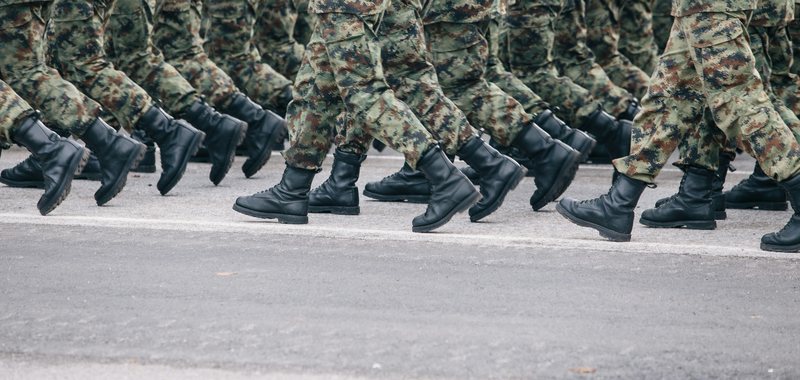
Germany, over 26 billion euros for army modernization - Investments include uniforms, personal equipment and armored vehicles
Germany plans to allocate nearly 19 billion euros to equip soldiers with new uniforms and personal equipment over the coming years, as well as another 7.5......

"Renewable energy, dominant" - IEA: In the next 5 years, more projects than in the last 40 years
Renewables will grow faster than any other major energy source in the next decade, according to the International Energy Agency, making the move away from......
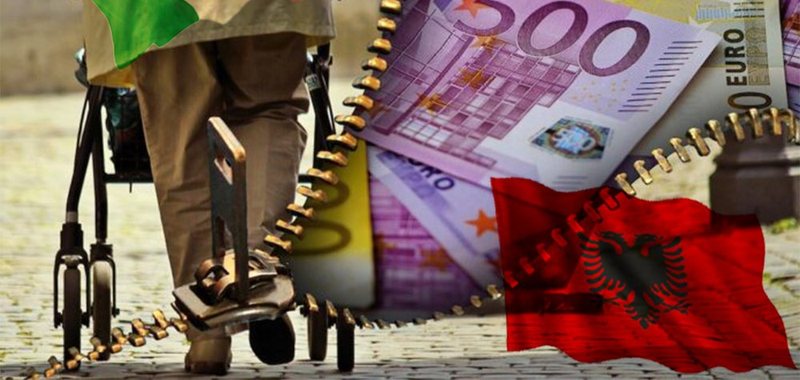
Albania and Italy, closer - First meeting between the two governments. Defense, industry, immigrants the main issues
For the first time, the Albanian and Italian governments will hold a joint meeting in Rome on Thursday, where the main issues to be discussed are defense,......

How much are the major currencies being exchanged today?
The US dollar has not registered significant fluctuations in its value this morning compared to the day before, as it was bought today at 83 lek and sold at......
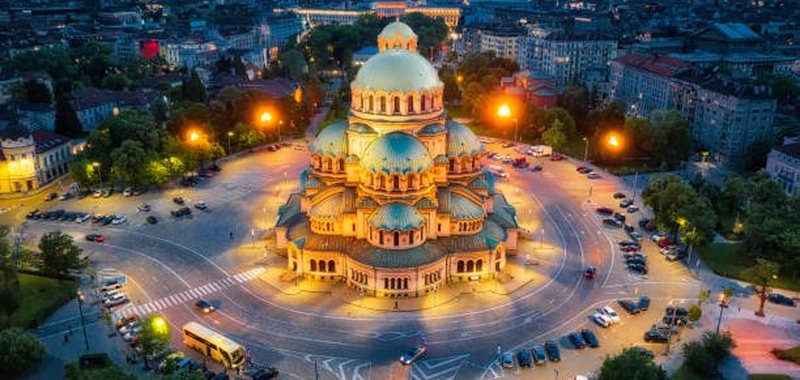
Bulgaria faces fuel shortage - US sanctions on Russian company endanger supply
Bulgaria has about a month's worth of gasoline reserves as it prepares for the start of U.S. sanctions on Lukoil, the Russian-owned company that owns the......

Unemployment in Britain rises to 5% - Recorded the highest level in the last four years
Unemployment in the United Kingdom has risen more than expected, reaching its highest level in four years, official data showed on Monday. It comes at a time......