Lobbying, draft law raises debate among interest groups - The term should be redefined. Difference between public and private interest activities


From separating the public interest advocacy activity of civil society organizations from that of self-interest, to the illegitimacy of informal meetings of public officials as lobbying, the draft law on lobbying has raised many discussions from interest groups.
A few months ago, a draft law on lobbying was published for public consultation, the first time that Albania has taken a step towards regulating this activity by law. The consultation process has now closed and a number of civil society organizations have provided their suggestions on improvements that need to be made to the draft law.
According to the European Movement in Albania (EMA), Partners-Albania for Change and Development, the Institute for Cooperation and Development (CDI Albania) and four other organizations, the draft law should make a clear distinction between advocacy activities of public interest, such as that of civil society organizations that do not have any profit, and advocacy activities of private interest, behind which there is economic benefit.
The European Movement suggests following the exclusionary model as in Lithuania, Latvia, Slovenia, Austria, Australia and North Macedonia, where a clear distinction is made between professional lobbying and advocacy in the public interest, exempting non-profit organisations from registration and reporting obligations. The lack of separation between lobbying activity for remuneration and public advocacy in the general interest may create unnecessary administrative burdens for civil society and limit the exercise of their role as legitimate actors in public decision-making processes.
On the other hand, the Albanian Helsinki Committee also suggests a redefinition of the term. The draft law states that lobbying is any activity undertaken with the aim of exerting influence on public, legislative or policy-making processes, through any form of communication or formal or informal meetings, with public officials, by natural or legal persons representing certain interests. The committee emphasizes that the informal network between large businesses and public officials can constitute an illegal influence on decision-making processes, so the concept of “informal meetings” should be removed, as they can constitute a premise for the exercise of illegal influence.
Regarding sanctions for violations, the ALTAX Center also believes that a gradual scale of sanctions and appeal mechanisms, both light and heavy, should be created.
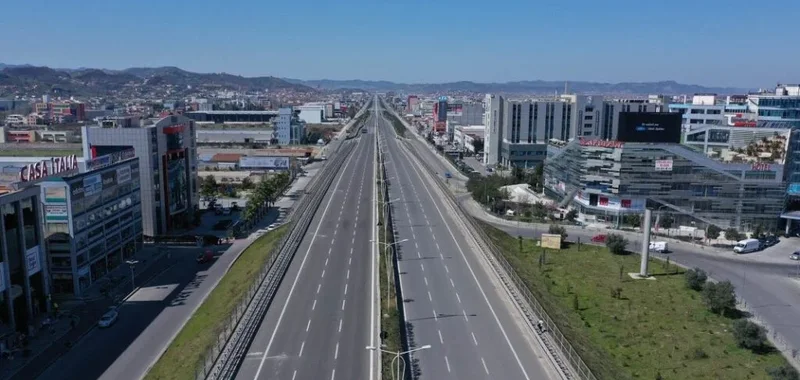
Tirana-Durrës, new lanes open this month - Kamza turn-Rinas overpass axis, Noni: We expect traffic improvement
The new lanes of the Tirana - Durrës highway, in the segment that starts after the Kamza turn and ends at the Rinas overpass, are expected to be opened for......

"Ceiling" on credit card interest rates - Trump asks banks not to charge interest rates above 10%
US President Donald Trump has called on US banks to impose a one-year cap on credit card interest rates at 10% starting January 20. The date also marks......
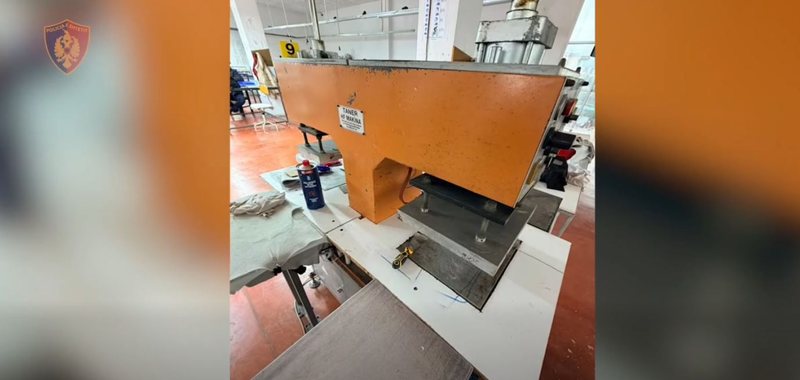
Warehouse with contraband clothing discovered - Products were printed with fake logos. A Turkish citizen is arrested. Another, wanted
As a result of the administration of information obtained that smuggled clothing was being stored in Kamëz, which was marked with fake logos of well-known......
Citizens can renew their identification documents at any IdentiTek office, anywhere in Albania.
With the new instruction, for all re-applications for biometric passports and identity cards (standard or expedited), the procedure can be carried out at any......
Kosovo, over 1 billion euros in missing funds - The political crisis in 2025 penalized the budget, businesses and citizens
The political crisis that engulfed Kosovo during 2025 has penalized the state budget, in addition to the consequences it has caused for families and......

Problems on several road axes - ARRSH: Contractors on site to clean up
During the night, rainfall continued throughout the country, bringing falling rocks, inert materials and the presence of water on the road. According to the......

"Invest in Venezuela's energy industry" - President Trump calls on US oil giants
US President Donald Trump met at the White House with executives from some of the world's largest oil companies to discuss Venezuela, saying he wants them to......
Bulgarians divided over euro as official currency - From February 1st it will become the sole legal tender
Bulgarians remain deeply divided over adopting the euro as their official currency, amid growing geopolitical uncertainties in Europe and escalating trade......