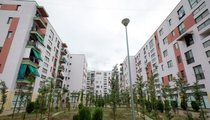
Who should increase the value of property? - Property revaluation, costs and benefits


From January 1, 2026, Albanian citizens will have the opportunity to revalue their assets at a 5% tax rate, with the aim of bringing cadastral values closer to market reality.
But according to a study conducted by "ALTAX", this initiative has benefits, but also costs for specific categories.
Thus, the study emphasizes that this opportunity is not the same for everyone: for some citizens it is an instrument to free up liquidity and gain access to credit; for many others, especially low-income owners, revaluation can constitute an expense that exposes them to long-term risks.
In practice, the proposed model is that of a tax on the “profit” taxed from the revaluation at 5%, but this 5% is applied only to the difference between the registered value and the new market value and not to the total value. This logic is positive because it avoids the full taxation of the property; however, the citizen does not pay only this tax. The process is accompanied by additional expenses: professional valuation, cadastral expenses, notary services and administrative records, which together significantly increase the initial costs.
But who should do the revaluation? According to "ALTAX", if the owner of a real estate property plans to sell within a 3-year period, take out a loan using the property as collateral, or formalize the value for investment reasons, revaluation may be a reasonable solution despite the initial costs.
But if the owner does not have such plans, has a low income, faces the risk of paying an increase in local tax based on the registered value along with the revaluation, in which case, the recommendation is not to carry out the revaluation for the time being.
The study highlights that a key element of uncertainty is the fact that this measure is temporary.
If after 2027 the rate returns to 15% and if there is no protection mechanism for those who have previously revalued, then the risk of additional costs on the owner who has revalued is now high. So to take an example, if a citizen revalues the property by 5%, and registers it at a higher value, but after 2027 the government increases the reference prices again, the citizen will pay 15% on the difference between the revalued value and the sold value.
This scenario would make the immediate 5% advantage unthinkable for those who do not receive the benefits of using the new value (credits, planned sales).
For these reasons, it is recommended to include not only fiscal incentives, but also guarantees, such as: exemptions for vulnerable groups, payment options for tax in installments, reductions in assessment costs for certain categories, and legal safeguards that allow retrospective taxation of a profit margin for a clear period and without burdensome costs for those who have acted in good faith.
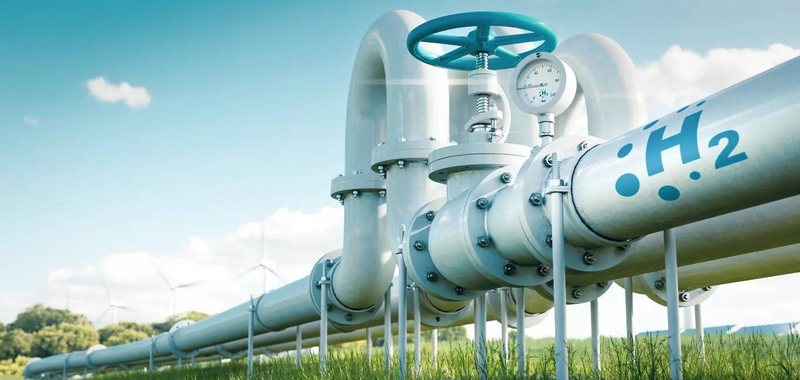
European green hydrogen market faces obstacles - High production costs and uncertainty, among the biggest challenges
The European Union's goal of producing 10 million tons of renewable hydrogen by 2030 is at odds with current market realities due to fuel production costs......

Bad loans return to decline in October/Non-performing loans indicator fluctuates, but remains at healthy levels
The latest data from the Bank of Albania shows that after a period of stability for several months, the level of non-performing loans increased slightly......
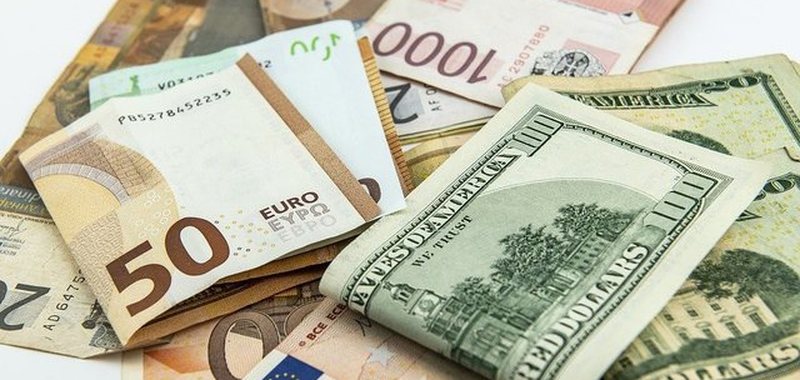
What happened in the foreign exchange market today – Slight fluctuations for the Swiss Franc
The US dollar has managed to stabilize this morning after a slight but continuous decline it suffered during these days, as it was bought today at 82.5 lek......

France approves social security budget - National Assembly approves bill amid political tensions
The Social Security Financing Bill was narrowly passed by the lower house of the French parliament. It was a major victory for Prime Minister Sébastien......

“2025, the second or third hottest year on record” - EU scientists: Global warming at dangerous levels
This year is expected to be the second or third hottest on record, potentially second only to 2024, which set record temperatures, according to the European......

Investors "choose" Kosovo - Foreign direct investments increased by 20% in 2025
Net foreign direct investment (FDI) inflows into Kosovo reached 730.2 million euros in the first nine months of 2025, up from 605.7 million euros in the same......

Record prices "diminish" Croatian tourism - Costs for visitors have increased by 50% since 2020
Croatia's 2025 summer season has deepened concerns about the country's position in the Mediterranean market, as July and August saw a sharp drop in visitors......

Albania aims to increase American investments - Saro: AFTERCARE application dedicated to foreign investors
The Albanian Investment Development Agency, in collaboration with the American Chamber of Commerce, held a roundtable discussion on American investors who......