Can Hormuz be bypassed? - Gulf countries are considering major projects for this purpose

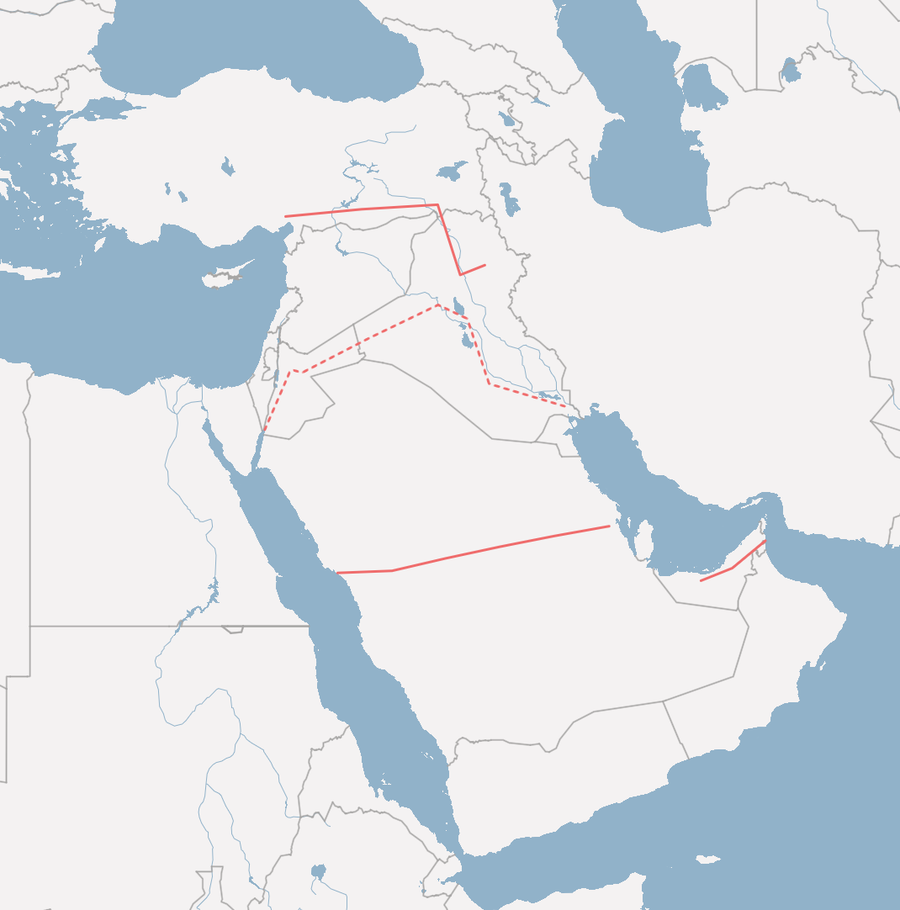
Leaders of Persian Gulf countries are moving forward with plans that would allow more of their crude oil to bypass the Strait of Hormuz entirely and help secure exports in the long term.
Earlier this month, the Financial Times reported that Saudi Arabia, the United Arab Emirates and others were actively considering new oil pipelines that would run parallel to existing structures, along with expanded export terminals on alternative coastlines.
The existing 1,200-kilometer (746-mile) Saudi pipeline is already operating at a maximum capacity of 7 million barrels per day (bpd), up from 5 million before the war, while the United Arab Emirates is transporting another 1.8 million barrels per day to its port of Fujairah.
The FT quoted energy officials and experts as saying that, although new pipelines are costly, time-consuming and sometimes politically complex, they may be the only way Gulf states can reduce their vulnerability to future disruptions.
Kuwait, Bahrain, and Qatar face a major geographical problem, as they have no alternative coastlines and almost all of their hydrocarbon exports pass through Hormuz. They would most likely have to go through Saudi Arabia or Iran, which would mean long pipelines and complicated political negotiations that would take at least three to four years — perhaps longer.
Iraq's existing export pipeline from the northern Kirkuk region to Turkey was built in the 1970s and restarted last September after a two-and-a-half-year shutdown. It is now pumping up to 250,000 barrels per day.
The Hormuz crisis has also given new impetus to other western routes. Earlier this month, the Iraqi government put the $4.6 billion (3.9 billion euros) Basra-Haditha segment, which runs south to the Syrian border, out to tender.
The 685-kilometer line is seen as the first critical section that could later be extended to the port of Aqaba on the Red Sea in Jordan, or perhaps in Syria or Turkey. If approved, it would have the capacity to transport up to 3 million barrels per day in stages.
Iraq has been considering a separate pipeline to Oman's Duqm port in the Gulf of Oman, with initial talks announced in September.
In addition to pipelines, Gulf countries already have concrete plans to expand the limited rail and road networks that connect them to help facilitate the export of goods.

Oil prices rise 2% - Peace talks stalled. Strait of Hormuz still closed
Oil prices rose nearly 2% on Tuesday, extending gains from the previous session, as efforts to end the US-Iran war appear to have stalled, with the Strait of......

Businesses increase supplies for the summer season/ Imports increase for the season, ships at the highest level since 2005
Albania appears to be entering the 2026 summer season more prepared, with a significant increase in imports in several categories directly related to......
Works on the road "Kthesa e Bërdica - Ura e Bahçallëkut", Karakaçi: Asphalting to be completed by May 7
Works on the road segment "Bërdica Turn - Bahçallëkut Bridge", Shkodër, a very important axis for both the northern capital and the connection with......

Albanian tourism facing global challenges - Hila: There is increased interest, but uncertainty about closing reservations
Tensions in the Middle East are also reshaping tourism. Europeans are now looking for other alternatives to vacation, and one of these destinations is......

Albania is going cashless - POS payments are increasing significantly. Businesses towards equipment obligation by May 30
From morning coffee to supermarket purchases, Albanians are increasingly choosing to pay by card. In the first two months alone, January-February, the number......

Electricity consumption increases - ERE: Caused by expansion of economic activity by businesses and demand from households
Electricity consumption in the country has increased during 2025, reflecting a moderate expansion in demand, linked to both economic activity and increased......

Transactions over 10 thousand euros will be banned - The use of cash in commercial transactions is limited
The government sets a new limit on the use of cash in commercial transactions, within the framework of the draft law on the prevention of money laundering......

More departures abroad, ports gain ground/ Insecurity in the Middle East directs travel towards Europe
The departures of Albanian citizens from the country continued to increase in the first three months of the year, showing higher mobility compared to the......