More is spent on housing and services - Which EU capitals have rents higher than minimum wages?

Housing and utility bills are the largest category of expenditure for European households. According to the latest Eurostat figures, 23.6% of household expenditure in the EU goes on housing, water, electricity, gas and other fuels. Rents account for a particularly large share in large cities.
Most importantly, rent is a significant burden for those earning the minimum wage, exceeding their monthly income in many European capitals. According to an analysis by the European Trade Union Confederation (ETUC) based on EU data, the average cost of renting a two-bedroom apartment in the capitals of most EU countries exceeds the gross minimum wage.
Prague and Lisbon were hit hardest by rental costs. People earning the minimum wage in the Czech capital suffer the most. In Prague, the average rent is 1,710 euros, while the minimum wage in the country is 924 euros. This means that an amount equal to 185% of the minimum wage is needed to afford a two-bedroom apartment.
Lisbon ranks second with 168%. In Portugal, the equivalent gross monthly minimum wage (paid over 14 months a year) is €1,073, while the average rent in the capital is €1,710.
The share of the gross minimum wage required for rent also exceeds 150% in Budapest (159%), Bratislava (158%), Sofia (154%), Athens (153%) and Riga (151%). This means that those earning the minimum wage will have to spend their entire salary on rent and will still need more than half of their additional salary to cover it.
In contrast, Brussels emerges as the best EU capital for those earning minimum wages to afford rent. Gross minimum wages cover 70% of rental costs there. In Brussels, the average rent for a two-bedroom apartment is €1,476, while the minimum wage is €2,112.
Berlin is second best at 76%. The share of the gross minimum wage required for rent is 85% in Nicosia, 87% in Luxembourg and 96% in The Hague.
According to analysts, high housing costs and low wages are driving people into poverty and the economy towards a recession.
Bonds dominate domestic debt - 78% of the stock is held in long-term instruments. Banks remain the main investors
12-month treasury bills and 5-year bonds continue to be the most preferred government securities for investment. Domestic debt consists of short-term and......
Non-performing loans return to 3.85% in March/ Banks maintain stability, bad loans remain below 4%
The non-performing loan ratio in the Albanian banking system increased slightly to 3.85% at the end of March 2026, after the 3.8% level recorded in February.......

American households, record debt of 18.8 trillion USD - Late payment rates are rising on credit cards, student loans
Household debt in the US reached a record $18.8 trillion in the fourth quarter of 2025, $4.6 trillion more than at the end of 2019, according to the New York......

The week starts positively for foreign currencies – Dollar and Euro strengthen
The US dollar has registered an increase in value over these two days, starting the week positively as it was bought this morning at 80.5 lek and sold at......
"The world has lost about 1 billion barrels of oil in two months" - Aramco head warns of slowing market recovery
The world has lost about 1 billion barrels of oil over the past two months and energy markets will take time to stabilize even if flows resume, Saudi......

Trump "slams" Iran's ceasefire response - "It's completely unacceptable." What's expected to happen now?
US President Donald Trump rejected Iran's conditions to end the war in the Middle East, after the Islamic Republic responded to Washington's latest proposal......

Germany has consumed its natural resources by 2026 - Among the main causes, industrial branches with high energy consumption
Theoretically, Germany consumed enough natural resources for the entire year on Sunday. As part of the so-called "Earth Overburden Day", the Global Footprint......
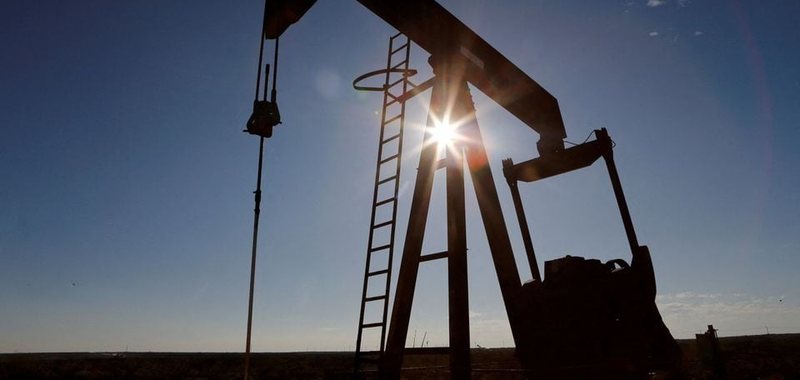
Oil, "a race against time" for the Strait of Hormuz - Morgan Stanley predicts prices up to $150/barrel
The oil market is in a race against time as the factors that helped limit price increases after the Iran war may not hold if the Strait of Hormuz remains......